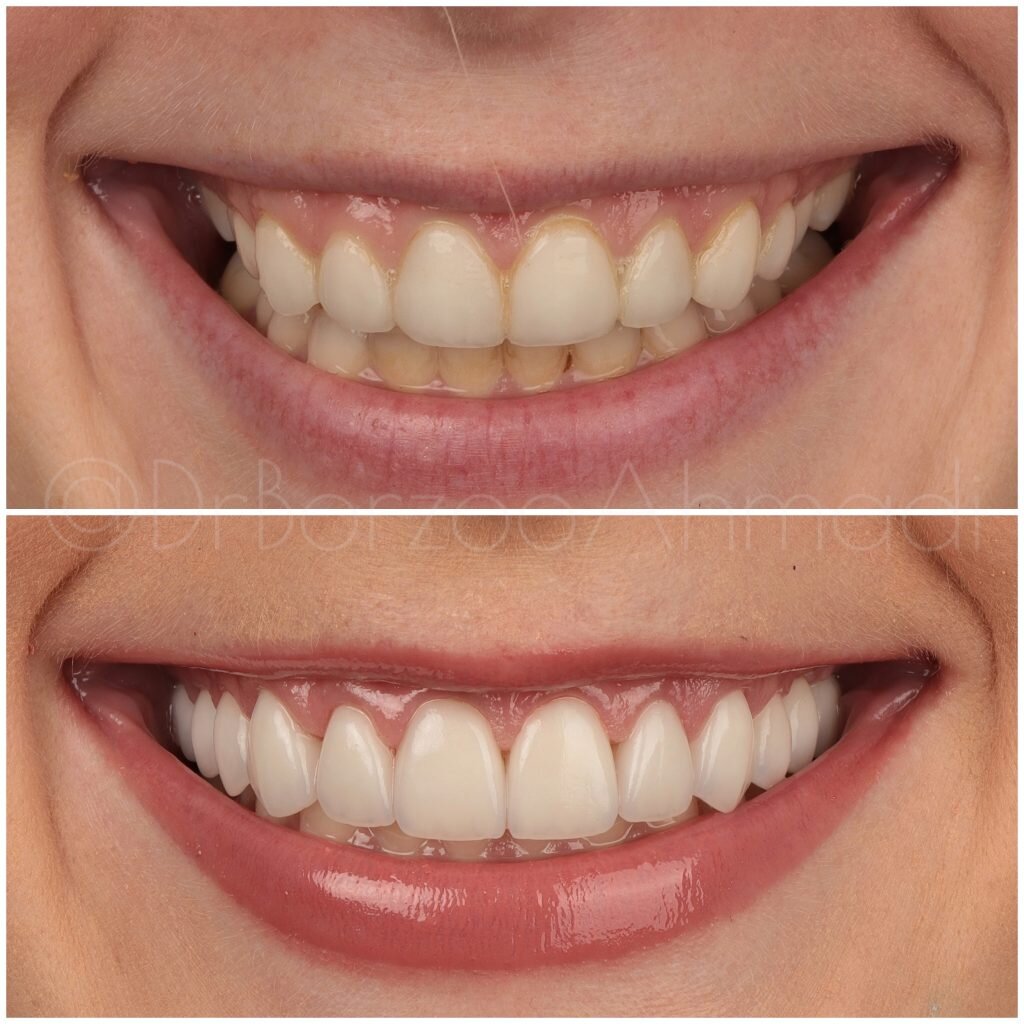
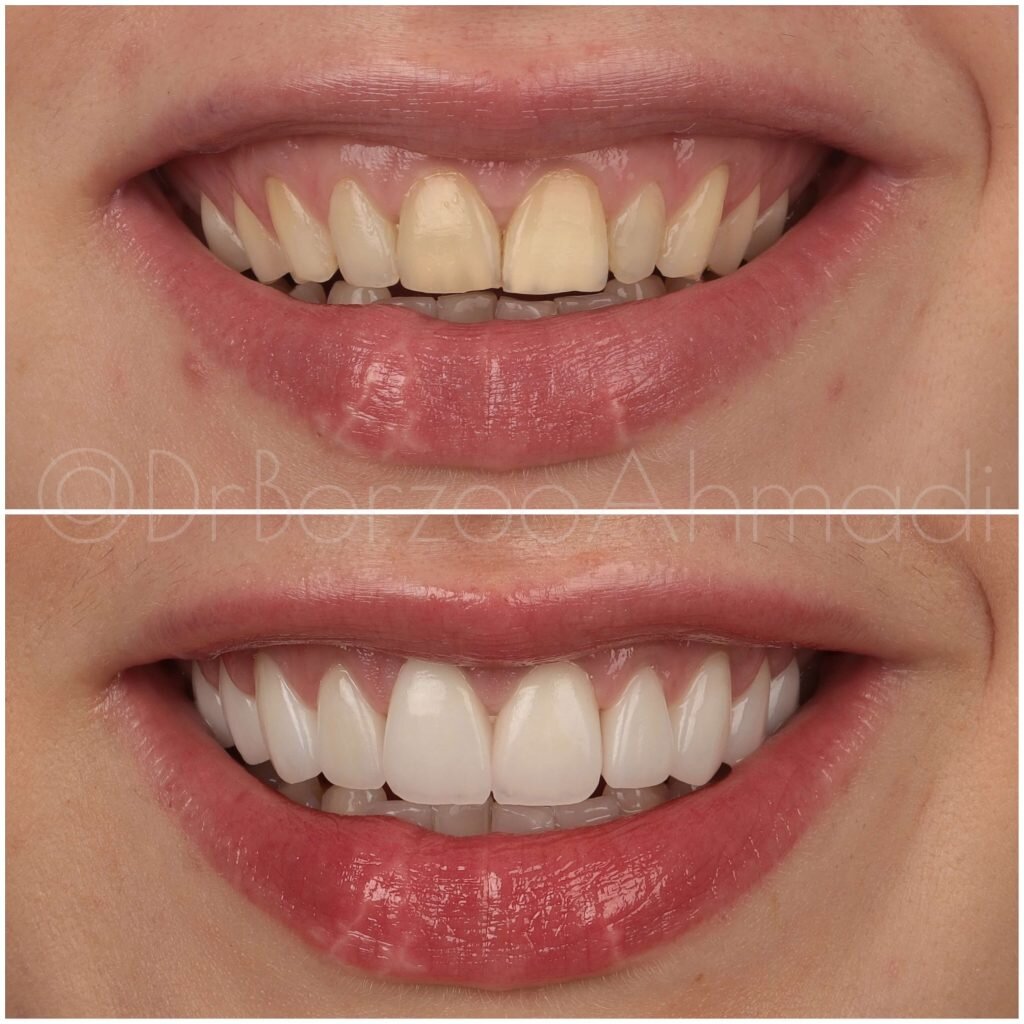
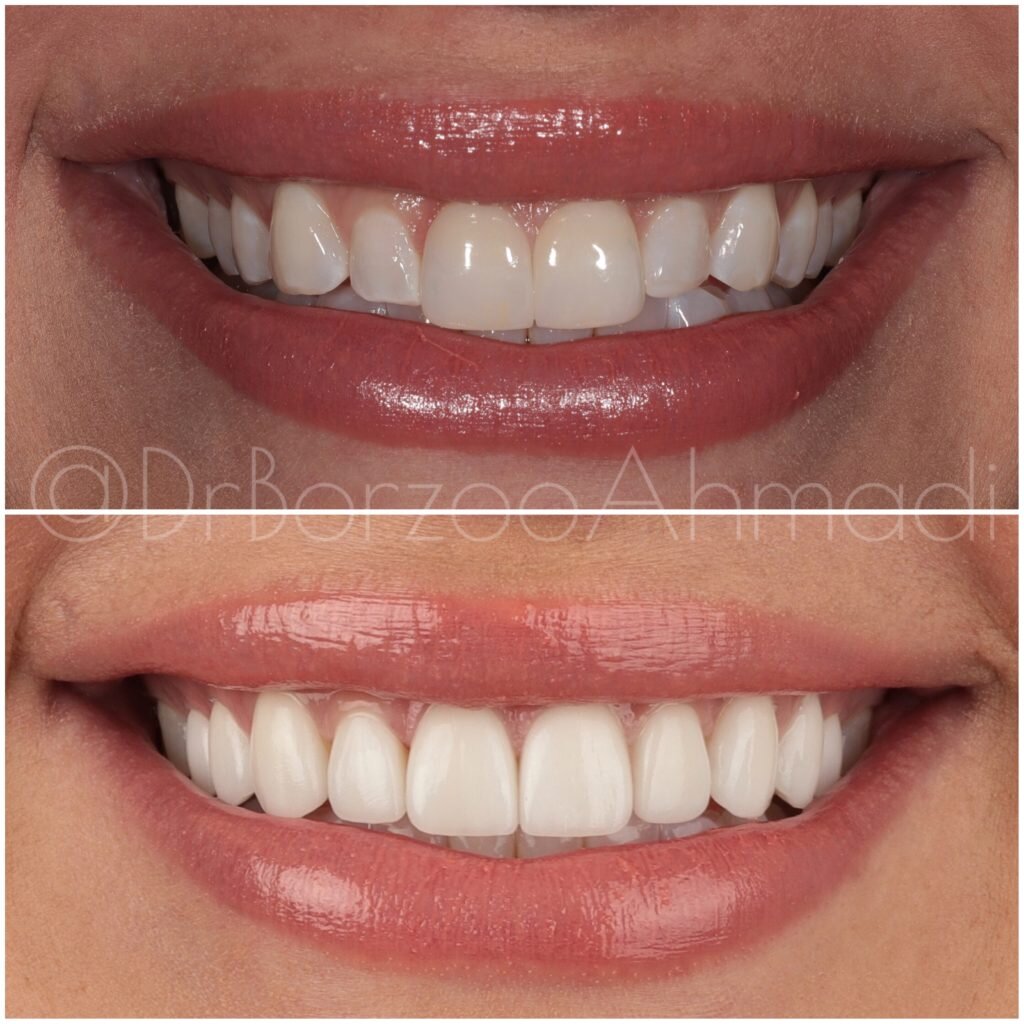
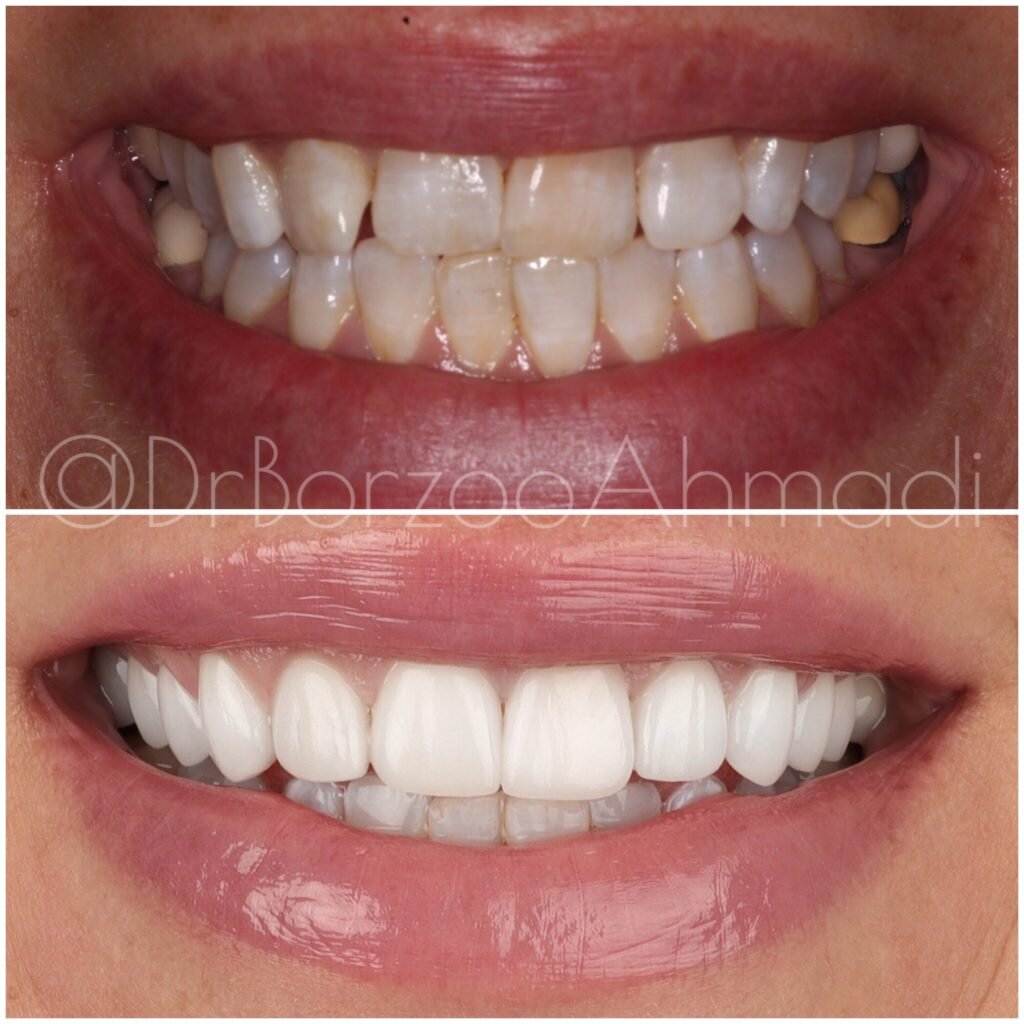
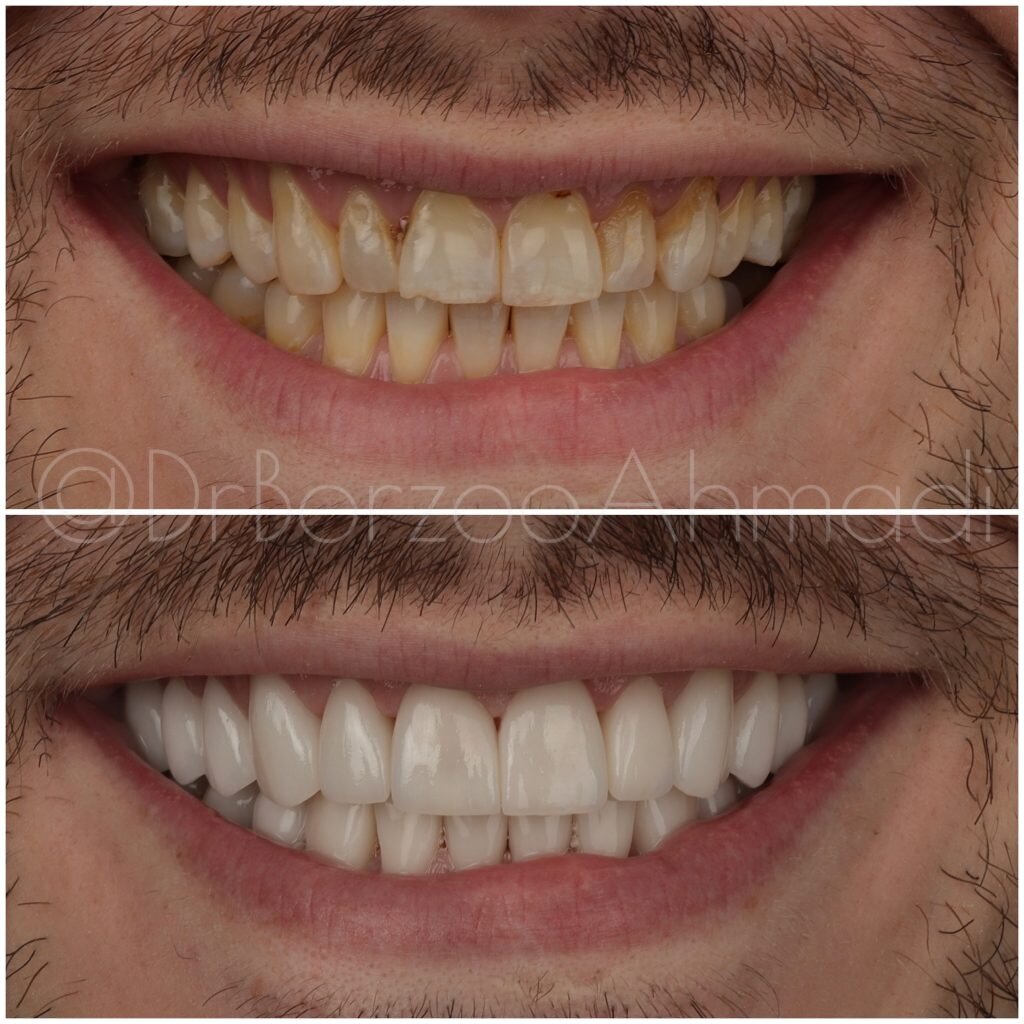
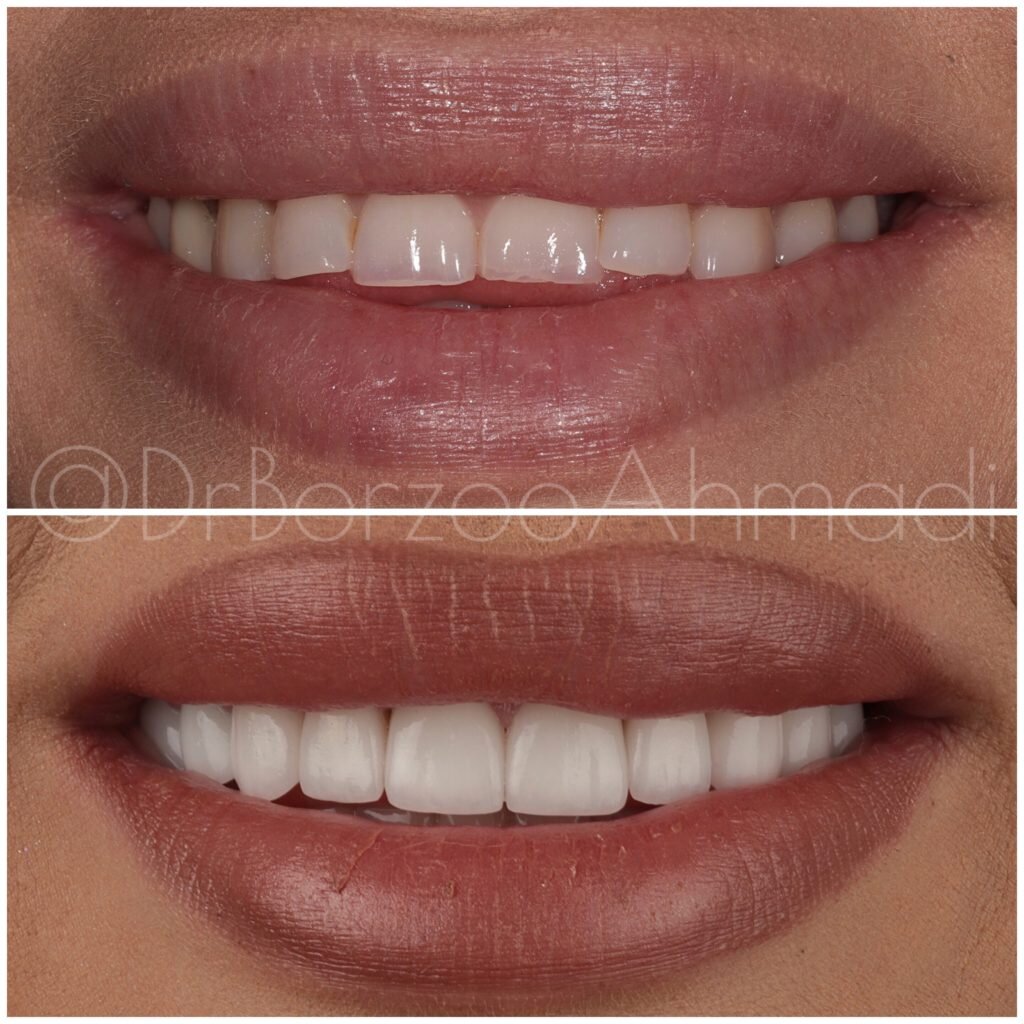
When you need to repair several teeth, each decision affects your entire mouth. Full mouth reconstruction creates a plan so that any crown placed now will fit your future bite. The first step is to decide which teeth can be saved. Dr. Borzoo welcomes Beverly Hills patients to his West Hollywood office for restorative dentistry focused on oral health. As a cosmetic dentist, he also pays attention to facial harmony. You’ll talk about what makes eating difficult and what you want your smile to look like.
Full mouth reconstruction uses several procedures to restore damaged or missing teeth in both the upper and lower jaws. This treatment, also known as full mouth rehabilitation or restoration, improves both function and appearance. The main goal is to save teeth that can be treated and create a healthy base for any replacements.
Your treatment plan may include crowns, dental implants, or other types of restorations. You will likely need several appointments. Local anesthesia will numb the area being treated, and sedation can help if you feel anxious. Recovery time and costs depend on the specific procedures you need.
When decay is widespread, teeth may be too weak for fillings. Grinding can wear down the surfaces you use to chew, and missing teeth put extra pressure on the ones that remain. Full mouth reconstruction looks at all these related problems together, instead of fixing each one separately.
The exam also helps find out what is causing ongoing damage. Grinding or acid erosion can affect new dental work. Gum disease needs to be treated before final restorations can last. If your main concern is stained teeth, cosmetic dentistry is usually a better option than reconstruction.
Dental crowns protect weakened teeth; onlays rebuild smaller areas. Root canal treatment may save teeth with infected pulp. Bridges replace one or more missing teeth in a row, using support from surrounding teeth or dental implants.
Dental implants act as new roots by placing posts in the bone. Once healed, they can support crowns, bridges, or dentures. Full mouth reconstruction makes sure these restorations work well with the teeth on the opposite jaw. If tooth height changes, your dentist will carefully check your bite.
A well-organized treatment plan helps each step support your long-term dental health. Some possible benefits are:
You may benefit from full mouth reconstruction if dental problems affect your whole mouth and single repairs would not solve everything. Dr. Borzoo will check your teeth and gums to see what can be restored. Keeping up with dental care is important to maintain your results.
If you have only a few dental issues, a focused repair may be enough. Active gum disease or health problems that affect healing can delay treatment. Smoking also increases the risks with dental implants. These factors help decide your treatment plan and when to start.
At your initial consultation, bring your medication list and explain previous difficulties with dental treatment. Include supplements and medicines affecting bleeding or bone health. Don’t stop prescribed medication on your own.
An exam and X-rays will help check your teeth and the bone that supports them. At this first visit, you and your dentist will talk about your concerns and create a treatment plan that works for you. You can also discuss other options and what results you want. If you need sedation, follow the fasting instructions and make sure someone can drive you home.
The full mouth reconstruction process generally progresses through five stages:
Numbing injections may sting for a moment. After that, you might feel some pressure or vibration. If you feel sharp pain, let your dentist know so they can check the anesthesia.
Dr. Borzoo offers IV sedation for suitable patients. Sedation dentistry manages anxiety, while local anesthesia controls pain at the treatment site. Aftercare addresses any soreness or sensitivity from that day’s procedures.
Do not chew or drink hot liquids until the numbness goes away. If you had sedation, follow the rules about driving. For surgery, your dentist will give you special instructions for controlling bleeding and keeping the area clean.
Eat soft foods after surgery. Hard or sticky foods can harm temporary restorations. If you are getting a crown, you may be able to return to desk work quickly. Extractions or bone grafting may need more recovery time.
Your gums may feel better before the deeper tissues are fully healed. Dental implants often need several months to bond with the bone, and grafting can add more time. Keep up with cleaning and follow-up visits, even if you feel fine.
Call for worsening pain, fever, persistent bleeding, a loose restoration, or an uneven bite. Seek urgent care for swelling that affects breathing or swallowing.
Some early repairs can make daily life easier before your full mouth reconstruction is finished. Final teeth are placed after all planned steps and healing are complete. Dental implants or orthodontics can make treatment take several months. Healing takes time, and rushing appointments cannot speed up the process.
Crowns usually last between five and fifteen years, and sometimes even longer. Dental implants can stay stable, but the restorations attached to them might need repairs. Full mouth restoration needs regular care and is not guaranteed to last a lifetime.
Use fluoride toothpaste and clean between your teeth and around restorations every day to protect your oral health. Regular checkups help catch decay and gum issues early. If you grind your teeth, your dentist may recommend a special appliance to protect them, even if it does not stop the habit.
Preparing a tooth for a crown means some tooth structure is permanently removed. You might feel sensitivity or need a root canal later. Restorations can chip or become loose, and natural teeth can still get cavities. Sometimes, adjustments or replacements are needed.
Surgery has risks, such as infection or injury to nearby areas. Dental implants might not bond with the bone or could lose support over time. Dr. Borzoo will talk with you about how your health and the treatment area can affect these risks.
The cost of full mouth reconstruction depends on the procedures you need. Saving teeth with crowns is different from replacing a whole arch with dental implants. Grafting, custom lab work, and sedation can also increase the total cost.
Ask for a detailed treatment plan that lists the costs for preparation, temporary restorations, final work, and follow-up visits. The office offers payment plans and financing through outside providers, depending on approval and terms. Insurance may help with some procedures, but coverage depends on your policy.
The best treatment depends on your oral health and how much your teeth need to be repaired.
An implant-supported arch or removable dentures may replace teeth that cannot be saved. Full mouth reconstruction does not automatically mean extracting treatable teeth. Ask what can be preserved.
Yes. Porcelain veneers can improve the look of stained or misshapen teeth as part of your overall treatment plan. Veneers cover the front of your teeth, but they cannot replace missing teeth or fix every weak tooth. Orthodontics may be needed to straighten teeth before restorations. Cosmetic treatments are done after any disease is treated, and whitening is done before choosing the color of porcelain, since porcelain cannot be lightened later.
Dr. Borzoo Ahmadi earned his DDS at UCLA and completed additional implant training through UCLA and the California Implant Institute. His practice combines restorative dentistry with facially driven Smile Design, using digital imaging and prototypes to develop the intended appearance.
You can talk about the size and shape of your teeth before the final restorations are made. This way, cosmetic choices match how your teeth work together. A great smile should look good on your face and be easy to use and care for.
Thinking about full mouth reconstruction in Beverly Hills, California? You can visit Dr. Borzoo at 9201 Sunset Boulevard, Suite 710, in West Hollywood. At your consultation, you’ll find out which teeth can be restored and what the treatment will involve. You can also schedule your appointment online.
No. Full mouth reconstruction can retain teeth with adequate support and a reasonable outlook. Extraction decisions are made tooth by tooth. Ask about alternatives before agreeing to removal.
Temporary crowns, bridges, or dentures may be possible. Your options depend on the procedures and healing tissues. Discuss temporary teeth before treatment begins.
Individual stages may take one visit, but full mouth reconstruction requires planning and follow-up. Teeth placed on surgery day may be temporary, not the final restorations.
Often, yes. Infection and unstable teeth come first. Later stages must protect existing work. Ask which parts of your treatment plan can safely wait.
Reconstruction is not a promised cure for jaw-joint pain. TMD needs its own diagnosis. Conservative options should be considered first. Irreversible bite changes are not routine first-line TMD care.
Your preferences guide tooth shape and shade. Earlier photographs can help explain your desired outcome. An attractive smile must also work with the available space and support in your mouth.
Time to see a dentist? Let us introduce you to a new level of care at the practice of Dr. Borzoo Ahmadi DDS, in West Hollywood, CA. Patients from West Hollywood, Beverly Hills, Los Angeles, and all over the world have unlocked more beautiful smiles and lasting oral health with our help. We can’t wait to show you your most confident smile.
Mon - Thur: 9:00 AM - 6:00 PM
Fri: 10:00 AM - 4:00 PM
Sat: By Appointment Only